JKF Journal
What to do with condolence letters?
A few weeks ago a friend told me about a book called The Happiness Project by Gretchen Rubin. It was a clever little book with lots of tidbits on things that make us happy- one of which was doing something that you have been putting off for a long time, like putting...
Visiting Excela Health
A few days ago I went to Pennsylvania to speak at a patient safety event sponsored by Excela Health. It was a pretty drive- through Maryland, across the Appalachian Mountains, and then into the Allegheny Mountains heading through Southern Pennsylvania. As Tom the...
Getting a Grip on My Fear of Flying
I've never really liked flying. As I've gotten older, my fear and dread of flying the friendly skies has only gotten worse. I'm not sure why that is- maybe it's because my children have already suffered the loss of a sibling and I just don't want them to have to...
Indiana – Working Together to Eliminate Health Care Acquired Infections
On Tuesday I spent the day with doctors, nurses and health care administrators from all around the state of Indiana. These health care providers had come to Indianapolis to attend a leadership conference put on by the Indiana State Department of Health. The first ISDH...
“Josie’s Story” a National MS Society Books for a Better Life Winner
Last night, the National MS Society chose Sorrel's book Josie's Story as the winner in the "First Book" category of their Books for a Better Life Award. Many thanks to the New York City - Southern New York Chapter of the National MS Society for this honor. The...
JKF Blog
Josie King Care Journals in a Pediatric Intensive Care Unit
Josie King Care Journals in a Pediatric Intensive Care Unit I am pleased to share an article that was published in the Journal of Nursing Care Quality (JNCQ),July/September 2013 - Volume 28 - Issue 3. The JNCQ is a "peer-reviewed journal that provides practicing...
Christmas in April at the Josie King Foundation
Christmas in April at the Josie King Foundation April is an especially exciting month at the Josie King Foundation. For me it is a little bit like Christmas. It is that time of year when little treats arrive in the mail, big manila envelopes filled with letters and...
HIPAA-Its Negative Influence on Mental Health Care?
I recently received this letter about HIPAA from a husband who believes it played a role in his wife’s death. I was saddened to read his letter, but grateful to him that he is speaking out in order to do something to improve health care in his wife’s memory. With his...
Guest Blogger – “I Want More”
Hello everybody- Last month, Sorrel visited the New York College of Osteopathic Medicine to speak to a group of medical students. It was a terrific visit, and we wanted to share a med student's perspective on Sorrel's visit. First year med student Syed Gillani shares...
Donating One’s Body to Science
Hello everybody,Lately we've been thinking about progress in health care- how advanced medical care has become, how we still are working towards even more advancement (particularly with regard to safety improvements), how we got to the point where we are. Knowing that...
A New Meaning for Halloween
I don't particularly like Halloween. I never really have. The candy makes everyone feel sick; the pumpkin carving is difficult even when you have the special little tools; and the costumes- it's just too hard to decide what to be. Three of my children- the teenagers-...
A Morning with Blue Cross Blue Shield Executives
Last week I spent the morning in Chicago at the Blue National Summit of the national Blue Cross Blue Shield Association. This conference was unlike any previous conference that Blue Cross Blue Shield had put together. In the past, each separate entity of the Blues-...
Patient Journal App Now Available, Created for You by the Josie King Foundation
I am so happy to make this wonderful announcement- The Josie King Foundation presents the Patient Journal App, a tool for your iPhone that you can use to record important information related to a hospital stay....
Summer Jobs
This summer has been a big work summer for my four children and their nine cousins. I’d like to say it is because their parents have instilled in them a good, firm work ethic, but the truth of the matter is that I think it is all due to their beloved and very generous...
A Thank You to Nurses
[Sorry for the delay in getting this up. We ran into some problems with Blogger, our blog host. Thanks for understanding!]Over the years throughout my journey into the health care industry I have been lucky enough to meet hundreds of nurses, maybe even thousands....
Care Journals Back in Stock
Hello everybody-I'm happy to report that Care Journals are back in stock. Anybody who requested a Care Journal and was put on the wait list will be mailed their Care Journals next week.Email carejournal@josieking.org or awesol@josieking.org with any questions that you...
Care Journal on Back Order
Hello everybody-The Care Journals are currently on back order. We hope to have Care Journals back in stock in late February. We are adding requests for Care Journals to a wait list, and will ship Care Journals as soon as we can.Please continue to email your questions...
50 Influential Women
Hello everybody-Sorrel has been named one of 50 influential women who are changing the world by Woman's Day magazine.Read Sorrel's story and see the entire list here.Thanks to Woman's Day for this honor!-Andrea
Shipment Notice for 2009
Hello everybody-The last shipment of 2009 will be mailed on Thursday, December 17. Requests received by 4:00 pm EST on Wednesday, December 16 will be included in the shipment. Requests received after 4:00 pm EST on Wednesday, December 16 will be shipped in January...
“Josie’s Story” named a top health book in 2009
Hello everybody-Josie's Story has been chosen as one of the top health books in 2009 by the Wall Street Journal's Laura Landro!Her description of Josie's Story plus the other books honored can be found online: http://tinyurl.com/yfu6xgu.We'll be reading some of...
Sorrel’s Visit to Richmond, VA
Hello everybody-On Tuesday, October 27, Sorrel is visiting her home town of Richmond, VA, for a book event:St. Stephen's Parish Hall6000 Grove Avenue6:30 pm - 8:00 pmSorrel will discuss her book Josie's Story, and the medical errors that led to her daughter Josie's...
At the Ivy Bookshop
Last week I had a book signing at the local Ivy Bookshop in my hometown of Baltimore. The Ivy- wedged between a Blockbuster and a men's clothing store just a mile from my house- has been a part of my book journey from the very beginning.I had fallen into a good...
Watch Sorrel on NBC’s TODAY Show
This morning, Sorrel appeared on NBC's TODAY Show with Matt Lauer and Dr. Nancy Snyderman. They discussed the problem of medical errors, and Josie's Story. Click to watch a clip of the interview.Thanks!
September 8th – Official Book Release of “Josie’s Story”
My book Josie's Story has been in stores for a number of weeks, however today- September 8th- is the official publication date. It is now in stores nationwide- 20,000 hardback copies in Barnes and Nobles, Borders, Amazon.com and book stores in little towns and big...
From the Institute for Family-Centered Care Conference
Hi there- In August, Sorrel had the opportunity to attend the Institute for Family-Centered Care's 4th International Conference in Philadelphia. The Institute for Family-Centered Care (IFCC) is a non-profit working with patient advocates and health care providers to...
Sponsors
The Josie King Foundation relies on the support of its generous donors to develop innovative programs aimed at preventing medical errors and sustaining the patient safety culture. We wish to thank our corporate sponsors and foundation supporters who make our work possible. To learn more about how your corporation or foundation can support the Josie King Foundation, please email Sorrel King at sking@josieking.org.


Josie King Necklace
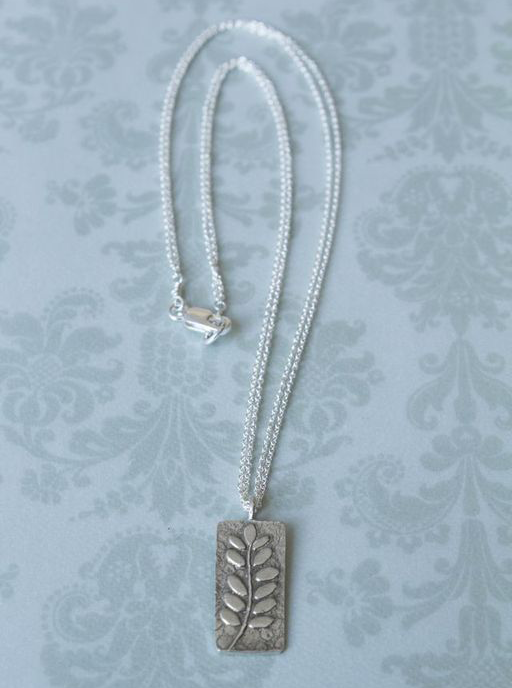
The Josie King Foundation is happy to offer one of our prettiest projects of all — The Josie Necklace — a reminder of all things positive.
The whimsical leaf is the symbol of the Josie King Foundation. It represents the desire to promote positive change – change in patient care, change in the health care industry and change in ourselves.

The Josie Necklace
The hand cast sterling leaf hangs delicately from a 16″ double sterling chain.
The Josie Necklace is a wonderful way to recognize those special care givers who find the good catches, who spend the extra time engaging patients and families, and who work hard to promote a culture of safety. They are a great gift for Nurse’s Week, Patient Safety week or for yourself knowing that all proceeds support the Josie King Foundation so that we can continue to create projects and programs which promote positive change.
For More Information
To order (bulk orders available) please contact: handerson@josieking.org
JKF COVID19 MESSAGE
14 May 2020
Dear friends,
Today will be our final day of meal deliveries to area hospitals for the time being. We are taking a break to reassess hospital need and will update our site, Facebook page, and Twitter account accordingly.
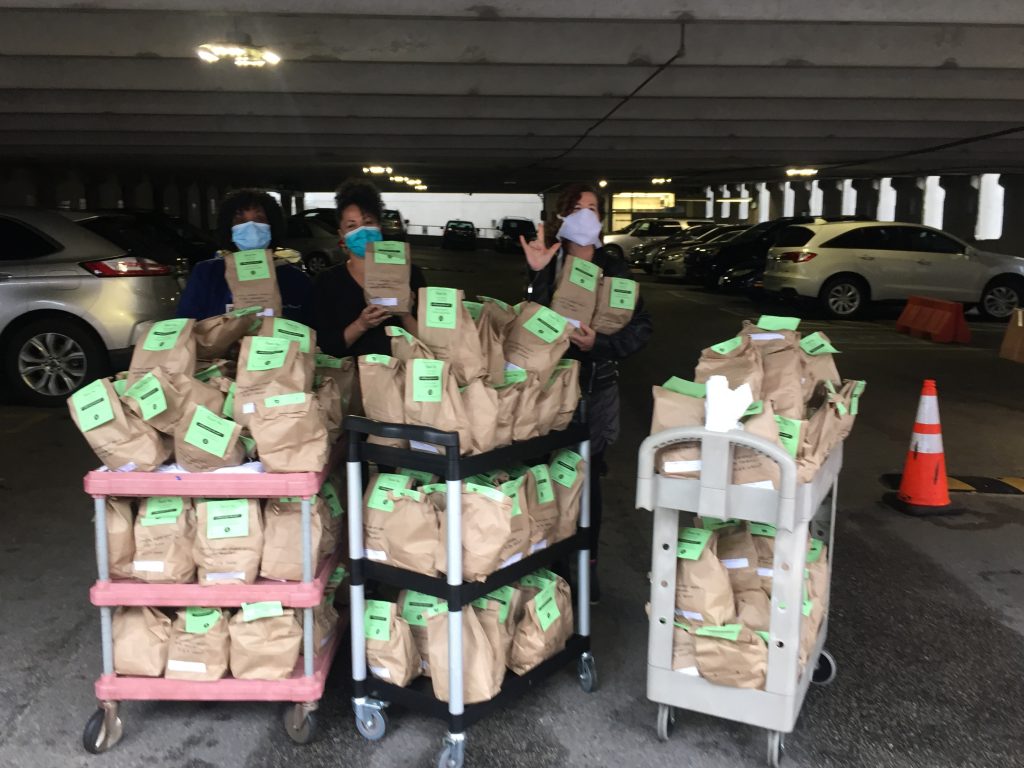
Thank you so much for helping the Josie King Foundation support our local caregivers during this stressful time. Because of your generous donation, we were able to supply over 5,000 meals to our healthcare workers who have sacrificed so much to keep us safe and healthy. We ran six weeks of deliveries, five days a week to over fifteen hospitals. We could not have done this without the incredible community support we received from The Corner Pantry, FreedomCar, and most importantly, you. It has been great to come together and provide a little boost to morale for our caregivers and to show them how much we care. Together we put some smiles on faces even though we can’t see them ???? (see below).
Stay well~
Sorrel and the Josie King Foundation Team


30 April 2020
Dear friends,
In the spirit of Nurse’s Week (May 6-12) and because we love our nurses who we need now more than ever, JKF has decided to continue the brown bag program until mid-May. Happy Nurse’s Week to you all and thank you for everything you do to keep us safe.
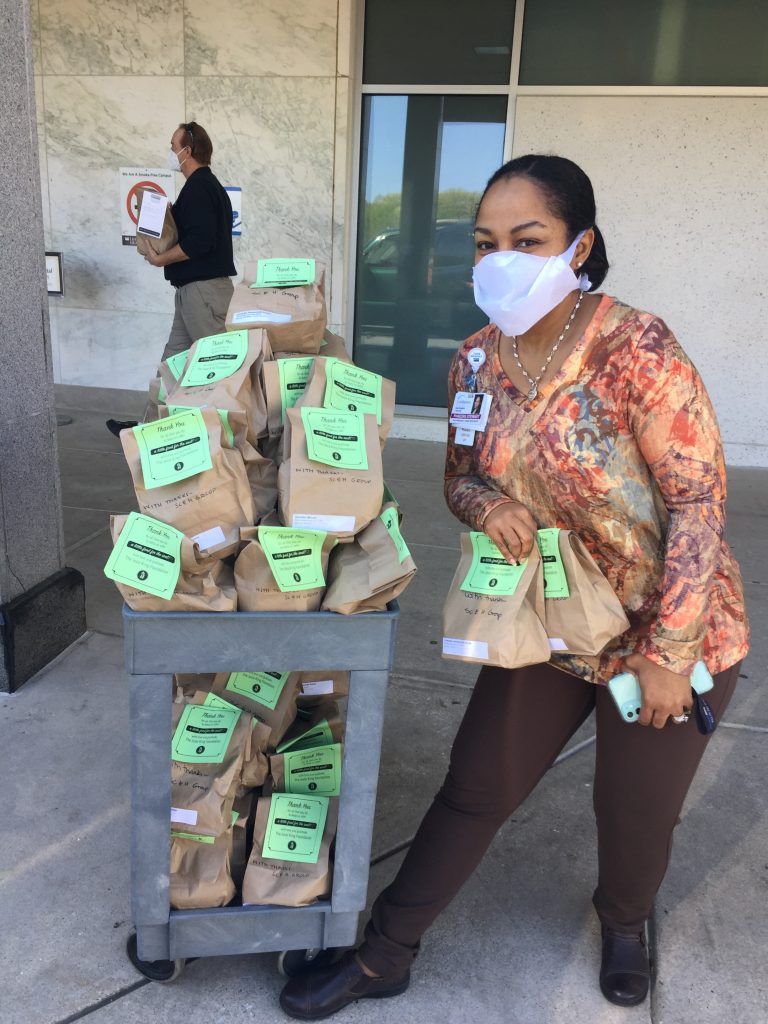
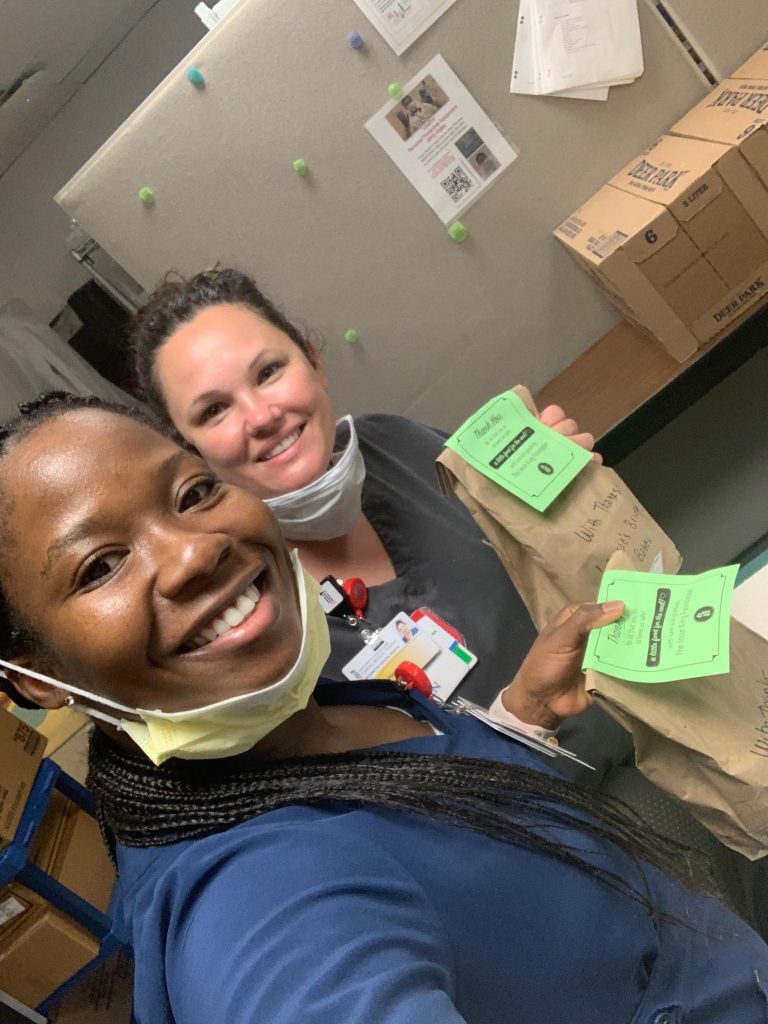
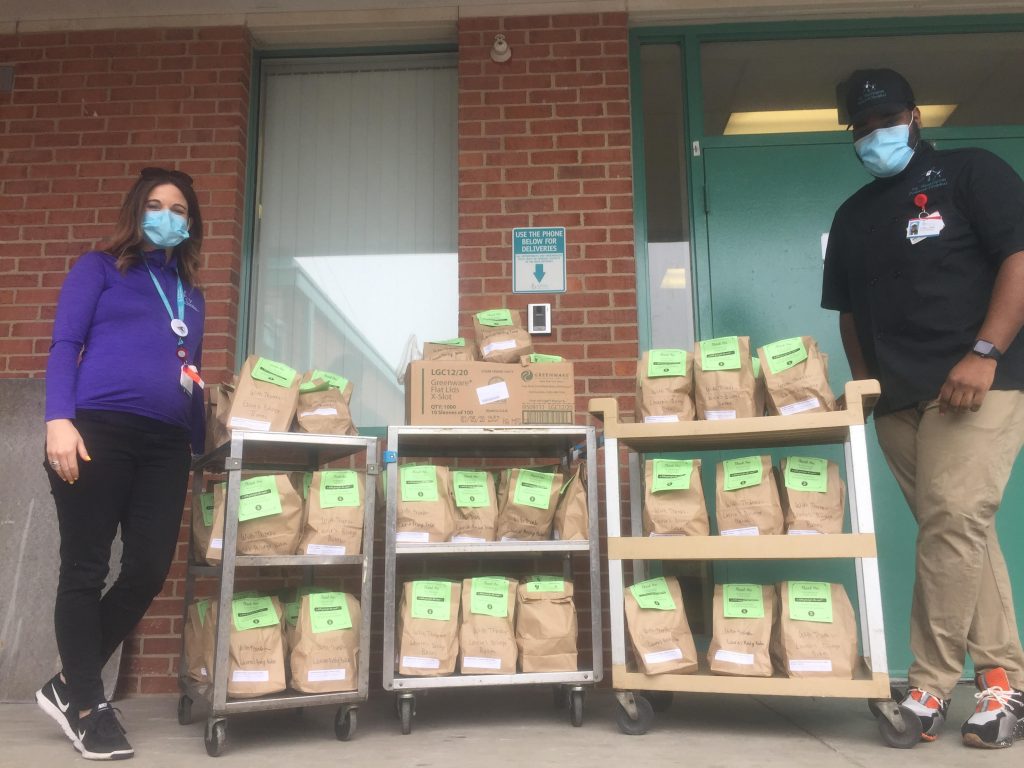
Here is a quick recap of our brown bag program. 4,125 brown bags were delivered for the month of April. We added breakfast packs and nightshift snacks for our amazing overnight staff. We delivered to 15 hospitals, Tuesday – Saturday. Thank you to Freedom Car for volunteering their big red van and drivers to help make these deliveries. We could never have done this without Freedom Car. Thank you to The Corner Pantry for making thousands of coronation chicken salad, smoked turkey-avocado, and yummy veggie sandwiches. Thank you to everyone who donated to help support the program. Together we put some smiles on many faces. See some fun pictures below.
Sorrel King and the Josie King Foundation Team



06 April 2020
Dear friends,
Bagged Lunch with Donor’s Name
I hope everyone is safe, well and hunkered down.
The Josie King Foundation has been reaching out to many of our hospital partners locally and around the country to offer ways in which we can help support our amazing caregivers who are under so much stress at this time. JKF has partnered with The Corner Pantry to deliver special brown bag lunches to hospitals in Baltimore and around the state. We completed our first week of deliveries with over 400 lunches delivered to the caregivers at Johns Hopkins, GBMC, St. Joe’s, UMMC Greene Street, UMMC Midtown, and Mercy. The lunches put lots of smiles on some weary faces. As of yesterday, Springwell, Union Memorial, Harbor Hospital, Good Sam, Franklin Square, Sinai, and Grace Medical have signed on to our program. Over the next few weeks, we will be delivering over 4000 meals. This is way beyond the reach we thought we would have. Thank you to Freedom Car for donating their fleet and drivers to help with deliveries.
If you would like to show your gratitude to our caregivers, please donate and join us in this effort. With each donation of $10, your name will be handwritten on a brown bag lunch to share in our message of thanks and appreciation. Feel free to donate as many brown bag lunches as you would like. It’ll be just like the bag lunch your mom made for you, but way better ????
Many thanks and stay safe,
Sorrel King and the Josie King Foundation team
P.S. Also, for your convenience, JKF has a Venmo account @JosieKing-Foundation
Your donation to JKF will be tax-deductible and 100% of the dollars you donate will go to feeding our caregivers.
(The Josie King Foundation is a 501(c)(3) tax-exempt, publicly supported organization. TIN 26-1118580.
Contributions are fully deductible to the extent permitted by law. Documents and information submitted to the state of Maryland under the Maryland Charitable Solicitations Act are available from the Office of the Secretary of State for the cost of copying and postage. A copy of The Josie King Foundation’s current financial statement is available upon request.)


Boston Marathon 2015
Picking Up the Pace for Patient Safety-Boston Marathon 2015 –fundraiser for the Josie King Foundation
April 25,2015
To Friends of the Josie King Foundation,
Thank you so much for supporting the Josie King Foundation as we “Picked up the Pace for Patient Safety” at the Boston Marathon. It was a cold, windy and rainy day. Knowing that I was running for the Josie King Foundation and that so many wonderful people had supported me/JKF made the wind, the rain and the pain a little less miserable.
To date, the race has raised almost $40,000 and the donations are still trickling in. Your support will enable the Josie King Foundation to ramp up our mission as we continue to partner with hospitals, medical/nursing schools to make medical care safer.
Thank you again for the kind donation. Your support meant so much to the Josie King Foundation, to my family and to me.
Many thanks,
Sorrel King

Athletes village, Sorrel and Perry at Boston marathon start — Getting ready to run for a mission (note the awesome Josie King Foundation T-shirts)

Sorrel and Perry at the Boston marathon finish line. 26.2 miles…almost to $40,000 and still coming in for the Josie King Foundation.
Article from the Boston Herald
Click here to read the full article on the Boston Herald.

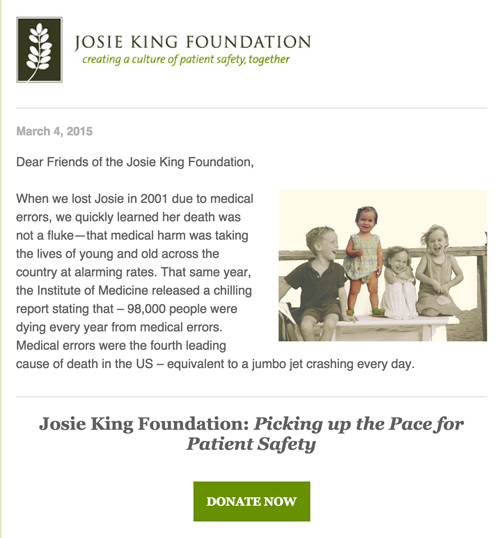
The JKF Email Campaign for Picking Up the Pace for Patient Safety –
Boston Marathon 2015